
ACM MobiCom 2026 Industry Day - Friday, October 30, 2026
Industry Day brings industry researchers into the MobiCom community, bridging cutting-edge industry practice and academic research. The program is planning to feature keynotes, invited talks, and panels on today's most pressing topics in wireless and mobile systems. Additional opportunities for participation and community engagement are being developed. More details will follow as the agenda is finalized.
Industry Day is open to all MobiCom 2026 full pass or workshop-only registrants, no separate registration is required.
- Ahan Kak <ahan.kak@nokia-bell-labs.com>
- Aruna Balasubramanian <arunab@cs.stonybrook.edu>
- Subhramoy Mohanti <Subhramoy.Mohanti@InterDigital.com>
- Yuze He <yuzeh@cs.cmu.edu>
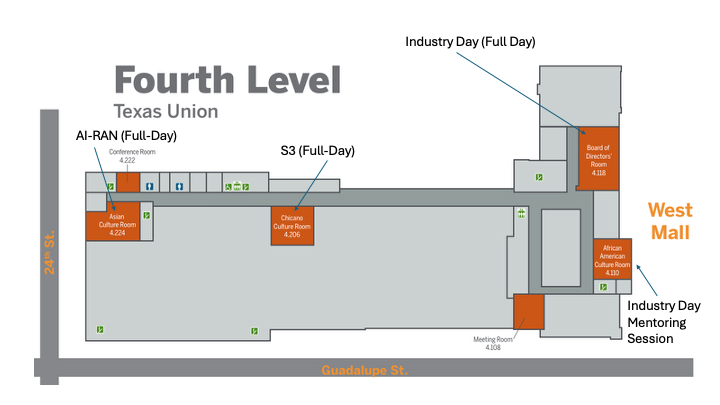
Location
Schedule
All times are local to Austin.
| Time | Session | Speakers / Details |
|---|---|---|
| 09:15–09:30 | Welcome and Opening Remarks — Introduction to Industry Day, its goals, and the organizing team. | |
| 09:30–10:30 | Morning Keynote: Cartesian: Spatial AI from MIT to Global Deployment. | Speaker: Fadel Adib, Professor at MIT; Founder and CEO of Cartesian Systems. |
| 10:30–11:00 | Coffee Break | |
| 11:00–12:00 | Panel 1: The Role of Next-Generation Networks in Supporting Physical AI Use Cases — A discussion of the networking capabilities needed to support emerging Physical AI systems and applications. | PanelistsKuntal Chowdhury (Nvidia), Sanjeev Malhotra (MSR), Mallesham Dasari (Northeastern University), Salam Akoum (AT&T) Moderator: Joerg Widmer (IMDEA) |
| 12:00–12:30 | Startup Forum — Lightning pitches from early-stage companies and academic spinouts, followed by moderated Q&A and constructive technical feedback. | Participating startups: Ennoia tech, All Things Intelligence |
| 12:30–13:30 | Lunch and Demo Showcase — Startup and industry demonstrations, with opportunities to meet the teams and discuss their systems. | Demo arrangements are being finalized. |
| 13:30–14:30 | Afternoon Keynote: What If We Could Program Physics? Intelligent Metasurfaces for Communication, Sensing, and Beyond. | Speaker: Lili Qiu, Professor of Computer Science, The University of Texas at Austin. |
| 14:30–15:30 | Panel 2: Research in Academia, Industry, and Startups — Career paths, translating research into products, and what industry needs from academia. | PanelistsMohamed Ahmed (HPE), Nakjung Choi (Nokia Bell Labs), Geetha Chandrasekaran (Ericsson), Robert LiKamWa (Rice University) Moderator: Mallesham Dasari (Northeastern University) |
| 15:30–16:00 | Coffee Break | |
| 16:00–17:00 | Student Mentoring Forum — Career conversations for students and postdoctoral researchers through company-based table rotations with industry researchers. RSVP Here | Mentors: Ahan Kak (Nokia Bell Labs), Subhramoy Mohanti (InterDigital), Nakjung Choi (Nokia Bell Labs), Joerg Widmer (IMDEA), Salam Akoum (AT&T) |
| 17:00–17:10 | Closing Remarks |
Keynote Speaker Details
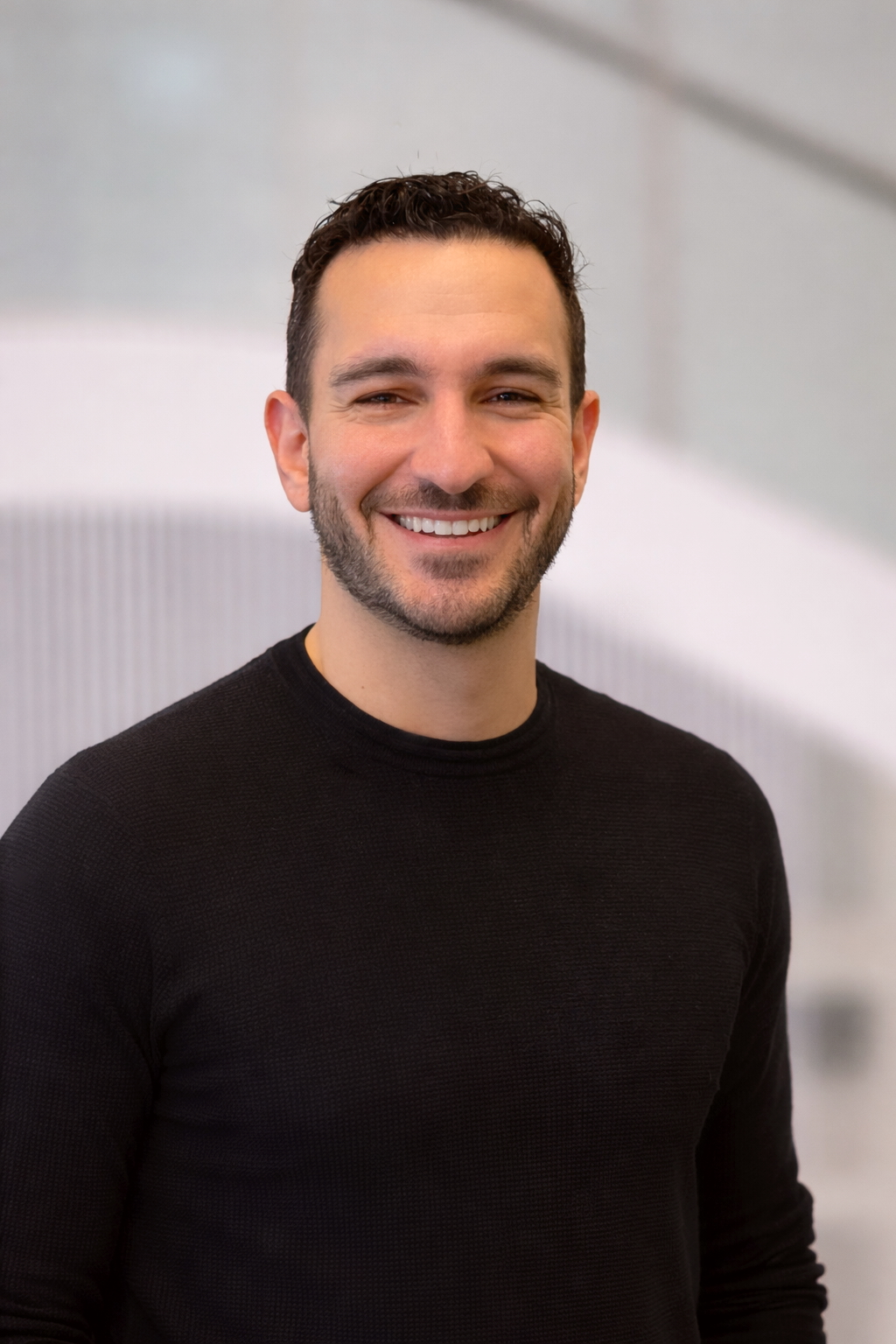
Fadel AdibProfessor at MIT; Founder and CEO of Cartesian Systems |
|
|---|---|
|
Title:Cartesian: Spatial AI from MIT to Global Deployment |
|
Abstract:
As AI moves into the physical world, it needs to understand the spaces in which it operates. Cartesian is building spatial AI systems for real-world operations across retail, warehousing, manufacturing, and robotics. Its first product turns ordinary handheld RFID scans into item-level location intelligence, driving operational and commercial value. The platform is already deployed across 750 retail stores in 15 countries, with deployment continuing to scale. In this talk, I will describe the research ideas behind Cartesian and its path from MIT research to enterprise deployment. Drawing on Cartesian and my other entrepreneurial endeavors, I will discuss what changes, and what does not, in moving between academia and a startup; why some technically strong ideas become scalable products while others do not; and the technical, product, and organizational decisions behind those outcomes. I will also touch on open problems in practical, scalable spatial AI. |
|
|
Bio:
Fadel Adib is a Professor at MIT and Founder and CEO of Cartesian Systems, an MIT spinout building spatial AI for the physical world, already deployed across 750 sites in 15 countries. At MIT, he directs the Signal Kinetics group, which develops wireless and sensing technologies for health, climate, robotics, and smart environments. His research has received 17 paper awards across leading venues, including ACM SIGCOMM, ACM MobiCom, ACM MobiSys, ACM SenSys, IEEE RFID, Nature Electronics, and Nature Communications. He has presented his research to multiple heads of state, including President Obama at the White House. Adib has been named one of the world’s top 35 Innovators Under 35 by MIT Technology Review, an ACM SIGMOBILE Rockstar, the inaugural Great Arab Minds Award winner in Engineering and Technology, and a World Economic Forum Young Global Leader. |
|
Lili QiuProfessor of Computer Science, The University of Texas at Austin |
|
|---|---|

|
Title:What If We Could Program Physics? Intelligent Metasurfaces for Communication, Sensing, and Beyond |
|
Abstract:
Modern systems are extraordinarily good at programming information, but the physical world through which information travels remains largely fixed. Wireless signals encounter whatever propagation environment happens to exist; sensors observe whatever signatures nature happens to expose. What if, instead of continually building more sophisticated algorithms to compensate for these physical constraints, we could program the underlying physics itself? This talk explores a vision of programmable physics: intelligent systems that co-design physical structures and computation to create desired communication and sensing functions. Metasurfaces provide an intriguing substrate for this vision. Rather than treating them simply as reflectors or antennas, we view them as physical operators that transform waves before computation ever sees them. Such operators can create otherwise difficult satellite links, reshape indoor propagation around blockage, encode spatial information into measurable signals, and amplify subtle physiological signatures. I will use our work spanning LEO communication, autonomous mmWave coverage, acoustic sensing, computational imaging, and glucose sensing to illustrate this emerging design space. As these physical operators become more expressive, however, designing them becomes a new bottleneck. The space of structures, materials, parameters, and deployment choices can quickly exceed what engineers can explore manually. I will conclude with our recent work on AI-assisted RF hardware generation, which combines agentic reasoning with domain knowledge, simulation, and design tools to automate and scale this increasingly complex design process. |
|
|
Bio:
Lili Qiu is a Professor of Computer Science at The University of Texas at Austin. She received her Ph.D. in Computer Science from Cornell University in 2001. From 2001 to 2004, she was a researcher at Microsoft Research in Redmond before joining UT Austin in 2005. From 2022 to 2025, she served as an Assistant Managing Director at Microsoft Research Asia, where she led cross-disciplinary research spanning AI, systems, and wireless technologies. Her current research focuses on wireless and mobile systems, sensing, and AI systems. She is a Fellow of the ACM, IEEE, and the National Academy of Inventors (NAI). |
|